

The Lifecycle Blind Spot
Why Most Email Journeys Fail After the First Click

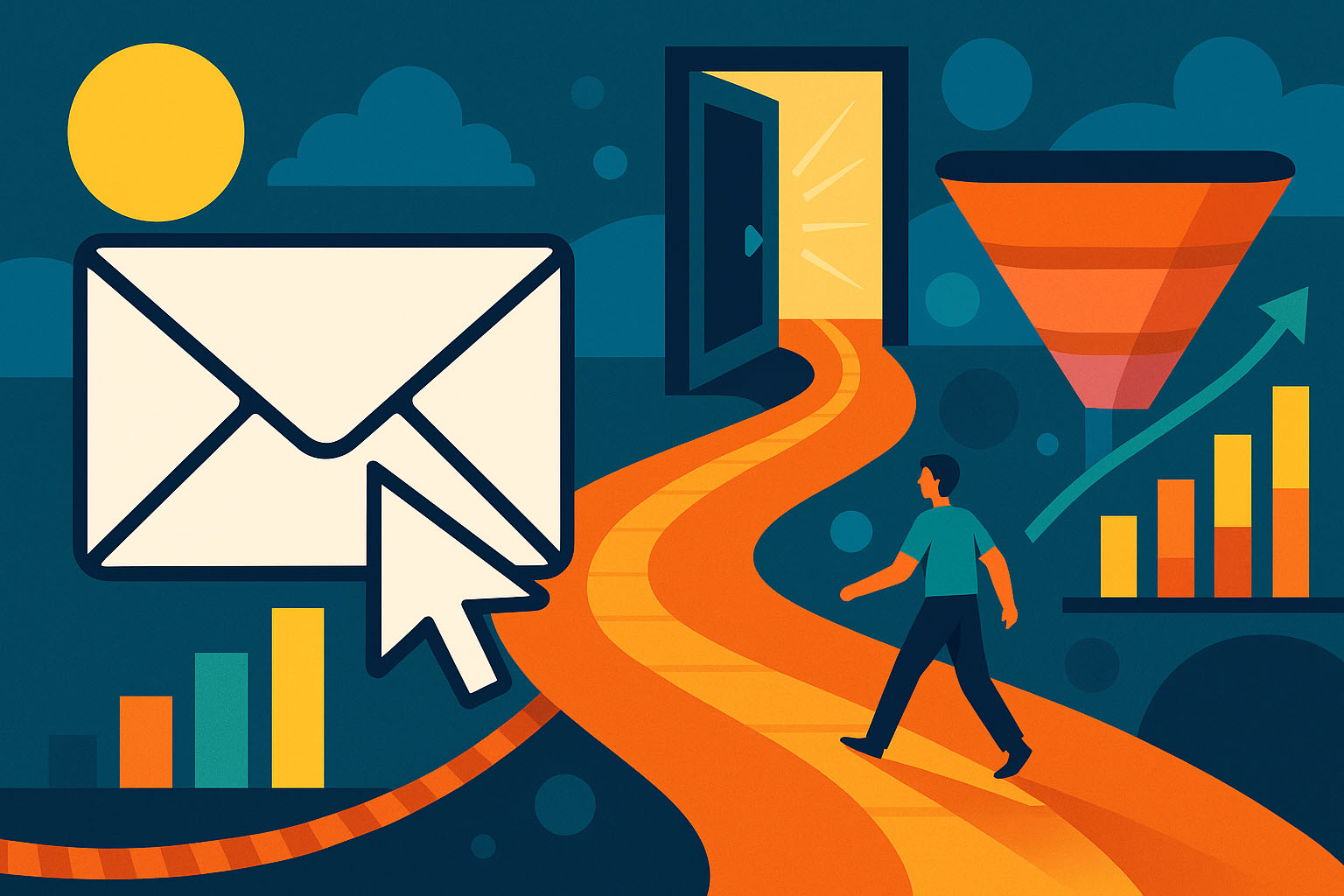
Marketers love the inbox, or at least fussing over the way into the inbox. We treat subject lines like science experiments, obsess over preheaders, and argue about hero images as if those alone make or break revenue. But there’s one aspect we often overlook: what happens the moment someone clicks?
The inbox isn’t the destination, it’s just the door. That click isn’t the finish line, it’s the starting line. And if what follows feels clunky, irrelevant, or confusing, all the hard-won attention evaporates into the ether. I’ve seen teams celebrate 40% open rates while sales stayed flat. The problem wasn’t the inbox, it was everything that came after.
Why CTRs Don’t Equal Revenue
Click-through rates look good in a dashboard, but they don’t pay the bills. They’re the equivalent of counting how many people walked into a store without asking how many actually bought something. In one program I led, the breakthrough didn’t come from subject line tweaks, it came from fixing the post-click flow and making sure the post-click experience was aligned with the visitor’s expectations. Once we aligned the landing page experience with the promise of the email, revenue per send jumped 31% in one quarter.
The real lesson: a click is curiosity, not commitment.
The Real Fight Happens After the Click
So, if at best, a click merely signals interest, we need to find ways to ensure conversion follows in the actions that follow. This is where momentum lives or dies. A smooth, relevant post-click experience compounds trust and keeps the relationship moving forward. A mismatch, delay, or friction point doesn’t just lose today’s sale, it erodes the subscriber’s willingness to engage with you tomorrow.
That’s why inbox metrics can look strong while revenue flatlines: the trust reservoir is quietly draining post-click and damaging the overall relationship with prospects and customers.
It’s incumbent upon marketers to consider the entire visitor experience, even when parts of it fall outside their direct control. I once worked with a SaaS brand whose landing page was fast, clear, and visually sharp. The real leak? The confirmation email process, owned by the sales team. Follow-up emails took nearly two hours to arrive; by then, demo momentum had vanished and attendance had stalled at 40%. Fixing that single follow-up flow doubled attendance almost overnight.
“Clicks are not victories; they’re invitations, and what happens next decides your growth.”
Guiding the Journey Step by Step
Most email programs stumble by asking for the wrong thing at the wrong time. Respecting lifecycle momentum means meeting customers where they actually are:
- In awareness, they expect to learn something, not buy something. Are you teaching first, or are you rushing to sell?
- In consideration, they’re looking for comparisons, proof, or demos. Are you giving visitors enough information to confidently comparison-shop?
- At conversion, clarity and speed are everything. Are you making it effortless for them to act right now?
- In retention, continued value is what builds loyalty. Are you delivering ongoing value that makes customers want to stay?
As much as we want every customer to open our emails and buy right away, that’s not reality. Our goal is to move the customer from one step in the purchase process to the next (segmentation is a huge help here, but that’ll be a post for another day). Email is most powerful when it’s not a megaphone but a guide, moving people one stage forward with each interaction.
The Tiny Leaks That Drain ROI
Campaigns don’t usually fail because of one spectacular collapse. They fail because of momentum leaks — small, repeated breaks that quietly compound until trust is gone.
A page that loads slowly doesn’t just frustrate; it triggers what psychologists call cognitive strain. The experience feels harder than it should, and the brain interprets that friction as a reason to disengage. A promise in the email that doesn’t match the page doesn’t just confuse; it violates expectation, which research shows is one of the fastest ways to erode credibility. A form that asks for too much, too soon doesn’t just hurt conversions; it feels like overreach, planting the seed that your brand takes more than it gives. And a late follow-up email doesn’t just miss timing; it leaves the customer with a final impression of indifference. In each case, the “end” in the peak-end rule that defines how experiences are remembered.
These aren’t usability glitches. They’re trust fractures. And because trust compounds just like interest — every micro-win accelerates momentum, while every micro-failure reverses it — the downstream cost of these leaks is far greater than most dashboards reveal.
The fix isn’t glamorous, but it’s high leverage. Stop treating the post-click path like a checklist of optimizations and start evaluating it as a system of trust. Walk through your last campaign as if you were the customer. Did each step make the next one easier, clearer, and more valuable? Or did it drain the very momentum your subject line worked so hard to earn?
The Shift in Mindset
Email campaign development does not, nor has it ever, existed in a bubble all on its own. Email ROI isn’t an inbox problem, it’s a whole marketing system problem. Every click is a fragile moment of momentum. If you honor the promise with speed, clarity, and relevance, trust compounds and the customer continues to move forward (on their timeframe, but they do move forward).
Like all worthy goals, the strongest campaigns start with the end in mind. Define the single action you want (i.e. demo, purchase, download) and work backward. Every touchpoint should make it easier, faster, and more natural for the customer to reach that outcome. Clicks should never be the goal, they are a barometer of the bigger picture, checkpoints that tell us if the early part of the sales process is resonating. The true measures of success, time on page, scroll depth, and conversions, live beyond the inbox and tell the far more important story.
Bringing It All Together
The future of email marketing won’t be won by cleverer subject lines or shinier inbox tricks, customers are too smart and ISPs will thwart gimmicks. Good email maketing will be won by leaders who understand momentum as a fragile, compounding force, one that can accelerate trust when honored or quietly destroy it when neglected.
That shift requires moving from an inbox-first mindset to a system-first mindset. Every click is not a victory but an invitation. What happens next determines whether that invitation builds confidence or breeds skepticism. And in an economy where attention is scarce and trust is brittle, that distinction is everything. Marketers are no longer just campaign managers, they are architects of experience, responsible for designing systems where every step reinforces the last. A journey that feels coherent, fast, and trustworthy compounds into growth. A journey that feels disjointed or indifferent compounds into decline.
So if your campaigns look great in reports but flat in revenue, the problem isn’t the inbox. It’s the system surrounding it. Map the journey. Find the leaks. Fix the breaks. Because the ROI you’re chasing isn’t hiding in your subject lines — it’s hiding in what happens next.
➜ Improve Your Campaign's Performance Today
Before you launch your next campaign, take ten minutes to audit your last one. Don’t stop at the inbox metrics, walk through the entire journey as if you were the customer. Did the post-click experience build momentum with speed, clarity, and relevance? Or did it break trust with delays, mismatches, or friction? The answer will tell you more about your true ROI than any open rate ever could. It will also so you how you can improve your next campaign.
If you’re ready to see where your email ROI is really hiding, let’s talk. At Reasoned Marketing, we design campaigns that protect momentum and maximize performance.